
Portalegre is situated near the border in a transition zone between the Alentejo and the Beiras, a situation which grants it particular characteristics. The landscape in the region ranges from the golden plains to green hills, including the Serra de São Mamede Natural Park.
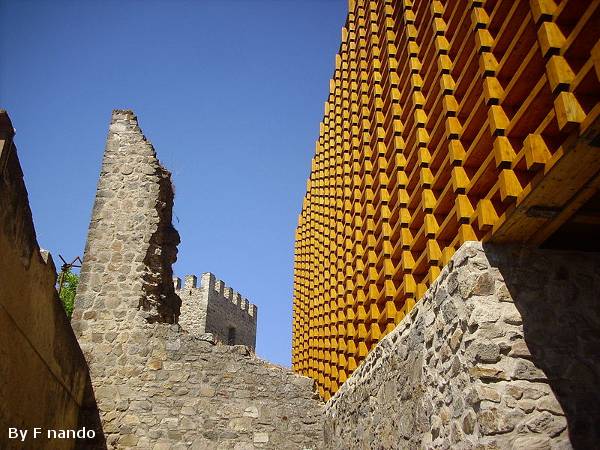
Its proximity to Spain ensured the town a prominent role in the defence of the border during the Middle Ages.
Everyday life at the time was dominated by military and religious activities, to which many buildings still bear testimony, most notably religious buildings, for which reason Portalegre has been called “the city of the seven convents.” These are the convents of São Francisco, Santo Agostinho, Santa Clara, Santo António, São Bernardo, São Sebastião and São Brás, the latter long gone.
The historic centre of Portalegre thus offers us an atmosphere that is rich in both architectural and cultural terms.
Take a walk along its narrow cobbled streets and enjoy the medieval walls, the convents, churches and buildings, with Baroque the predominant style. So many sites of interest!
PLACES OF INTEREST:
Convent of São Bernardo
-
Convento São Bernardo By Sacavem 1
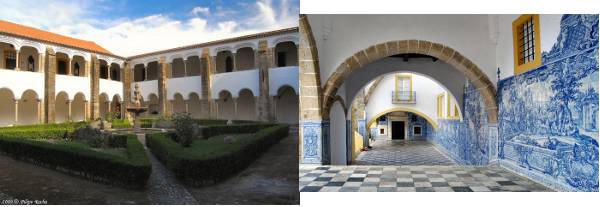
This convent dates from the 16th century and was founded by Jorge de Melo, Bishop of Guarda. Successive adaptations over the years explain the coexistence of various styles: Manueline, Renaissance and Baroque.
Particularly notable are the 16th-century pulpit in Estremoz marble, tile panels and the tomb of the founder. The church and the cloister were classified as National Monuments in 1910.
Cathedral
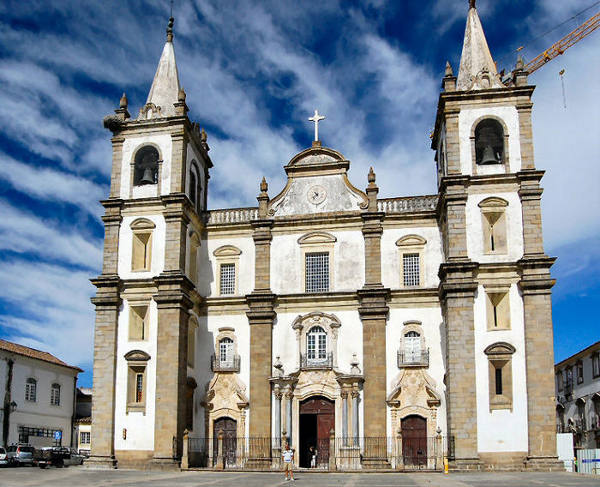
It was built in the 16th century by João III, in the space where the church of Santa Maria do Castelo had previously stood. It took two centuries to be finished and has been considerably altered since.
The main façade has Mannerist characteristics. It is divided into five bays on three levels with bell towers on the side bays. The lower level has three Baroque portals, with Tuscan columns flanking the main central portal.
-
Cathedral by Sacavem 1 -

Cathedral. Interior_by Sacavem 1
Casa Museu José Régio
This was the house that the poet chose to live in when he retired. After his death, it was converted into a museum where many of the objects that José Régio collected throughout his life are displayed. These include paintings and sculptures, mostly objects rooted in popular religion.
The library is notable for both its size and its first editions.
Museu da Tapeçaria Guy Fino
Portalegre Tapestries are famous for their extraordinary capacity to depict and represent designs.
Although the collection displayed may vary, the artists represented here include Maria Keil, Almada Negreiros, Eduardo Nery, Graça Morais and Le Corbusier.
A visit to the museum is not to be missed!
It was built in the 16th century by João III, in the space where the church of Santa Maria do Castelo had previously stood. It took two centuries to be finished and has been considerably altered since.
The main façade has Mannerist characteristics. It is divided into five bays on three levels with bell towers on the side bays. The lower level has three Baroque portals, with Tuscan columns flanking the main central portal.